Rosana Paulino (b. 1967, São Paulo) is a Brazilian contemporary artist, curator, and researcher. She holds a doctorate in visual arts from the University of São Paulo’s School of Communications and Arts and a specialization in printmaking from London Print Studio. Working in drawing, embroidery, engraving, printmaking, collage, and sculpture, she addresses archetypes, memory, family histories, and the histories of racial violence and slavery in Brazil, and what she has described as Black female psychology. She has had solo exhibitions in Belgium, Germany, and Brazil, and work in public space including The High Line in New York. With Adriana Varejão, she is one of two artists selected to represent Brazil at the 61st Venice Biennale. Her work is in the collections of the Centre Pompidou, the Museum of Modern Art, the Pinacoteca do Estado de São Paulo, the Harvard Art Museums, Tate, the Studio Museum in Harlem, the University of New Mexico Art Museum, and the Pérez Art Museum Miami.
Sonia Gomes (b. 1948, Caetanópolis, Minas Gerais) is a Brazilian contemporary artist who lives and works in São Paulo. She frequently uses found objects and textiles, twisting, stretching, and bundling them into wiry or knotty sculptural forms.
Edgar Calel (b. 1987) is a Maya Kaqchikel visual artist and poet from Chi Xot, San Juan Comalapa, Guatemala. He is known for multimedia work that explores Indigenous experience and brings Maya Kaqchikel worldviews, traditions, and rituals to international audiences. His work has been shown at the Helsinki Biennial, the Liverpool Biennial, the Berlin Biennale, Tate Modern, the Carnegie Museum of Art, SculptureCenter, the Museo Reina Sofía, and the National Gallery of Canada, and is in national collections including those of the United Kingdom and Canada. In 2023 he was included in Phaidon’s "Latin American Artists: From 1785 to Now."
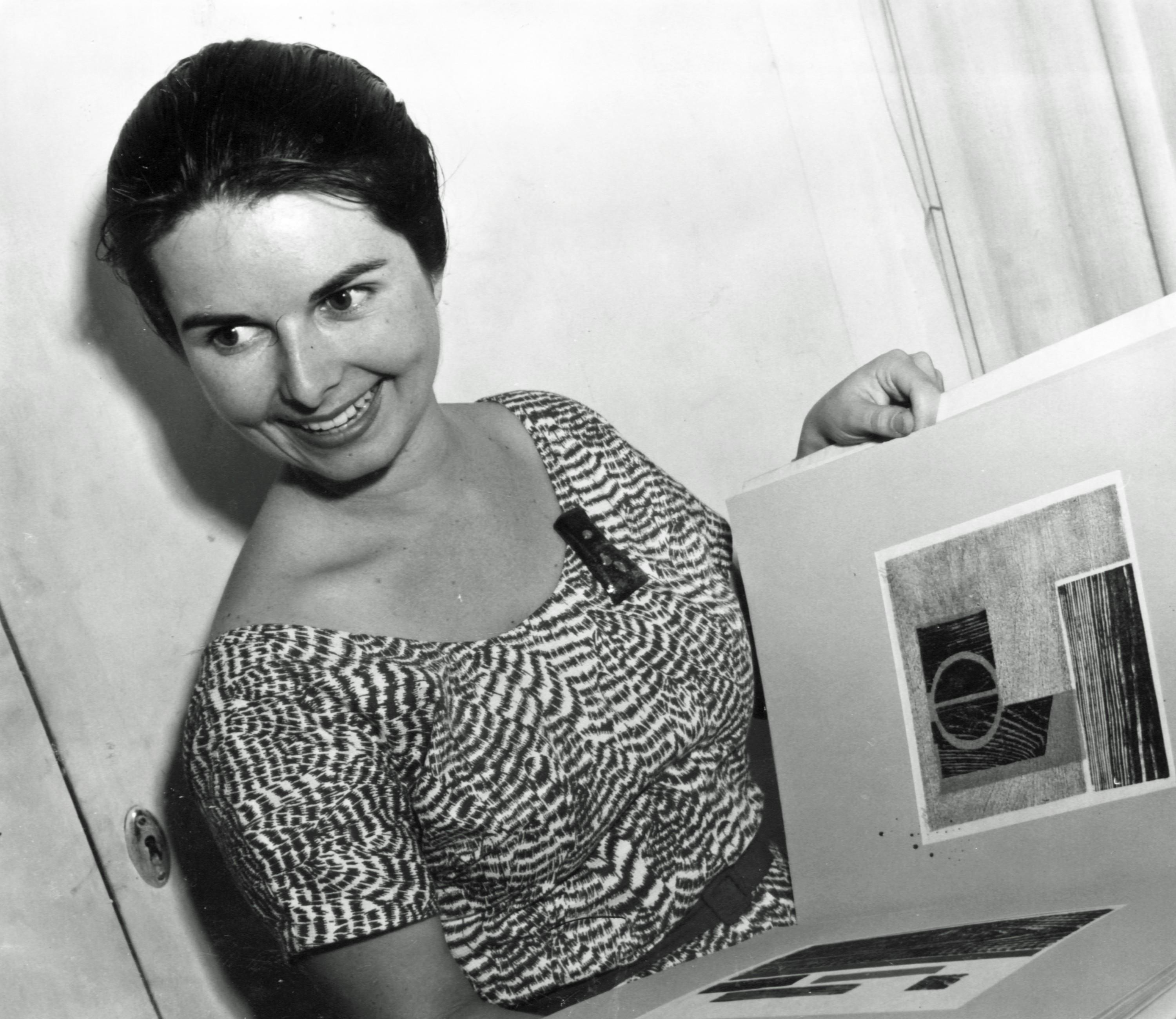
Lygia Pape (April 7, 1927 – May 3, 2004) was a Brazilian visual artist, sculptor, engraver, and filmmaker, a key figure in the Concrete movement and later a co-founder of the Neo-Concrete Movement in Brazil in the 1950s and 1960s. Along with Hélio Oiticica and Lygia Clark, she helped expand contemporary art in Brazil, pushing geometric art toward interaction and toward ethical and political themes.
Lygia Pape. Arquivo Nacional, public domain, via Wikimedia Commons