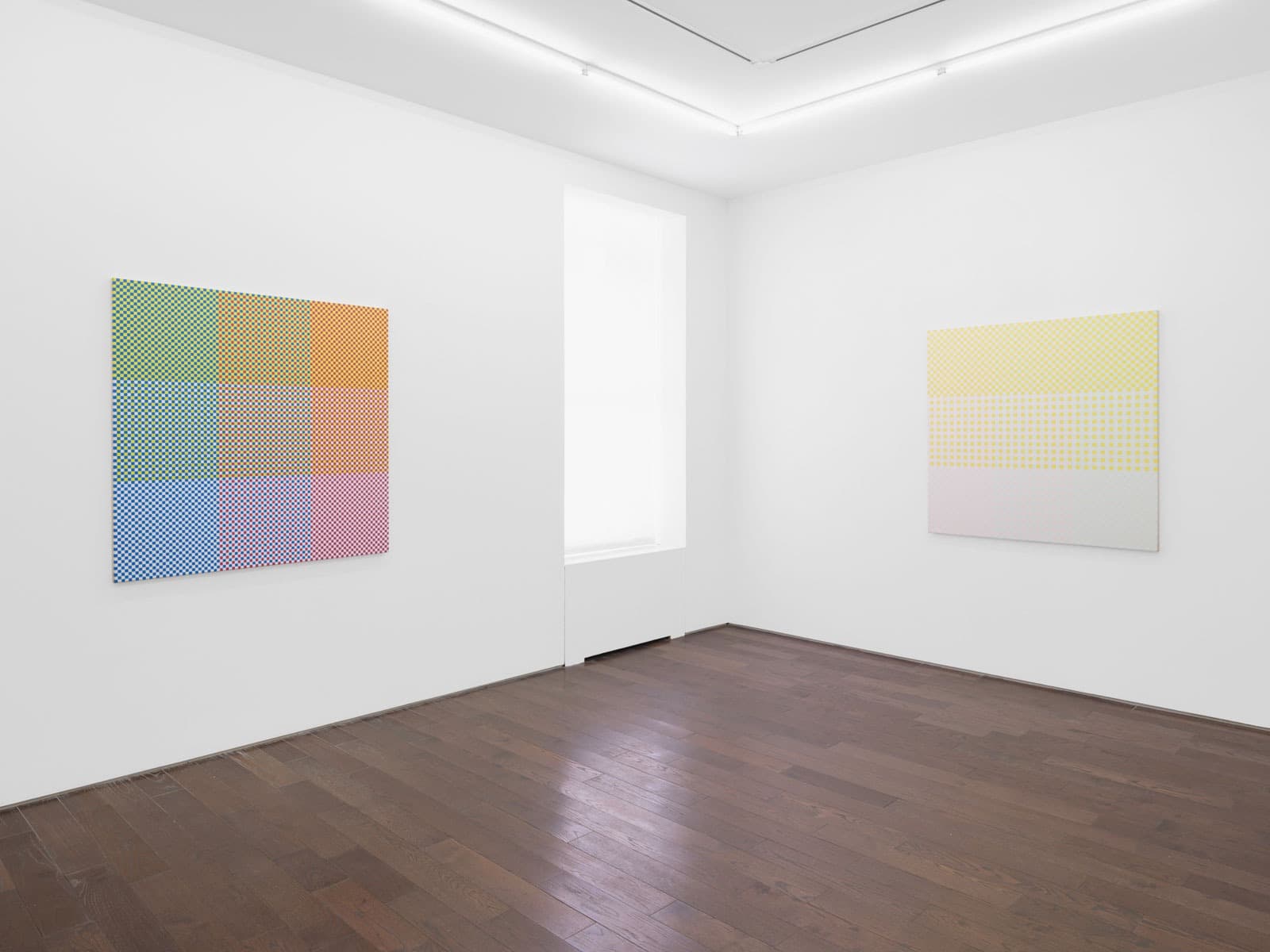
Sanford Wurmfeld: Squares 1971–74 presents five never-before-exhibited 48-inch square canvases from a pivotal moment when Wurmfeld departed from shaped canvases to develop the technique that would define his practice. Each canvas is filled with hundreds of small squares acting as modules of light, optically mixing two to four discrete hues in the eye and brain rather than on the palette — a technique pioneered by Seurat and Signac, here taken to new extremes. The result is an uncanny range of colors unobtainable through conventional mixing, producing sensations that shift from crackling visual energy to deep serenity depending on the viewer's duration of looking. Seeing, as critic John Yau observed of Wurmfeld's work, is a temporal act.