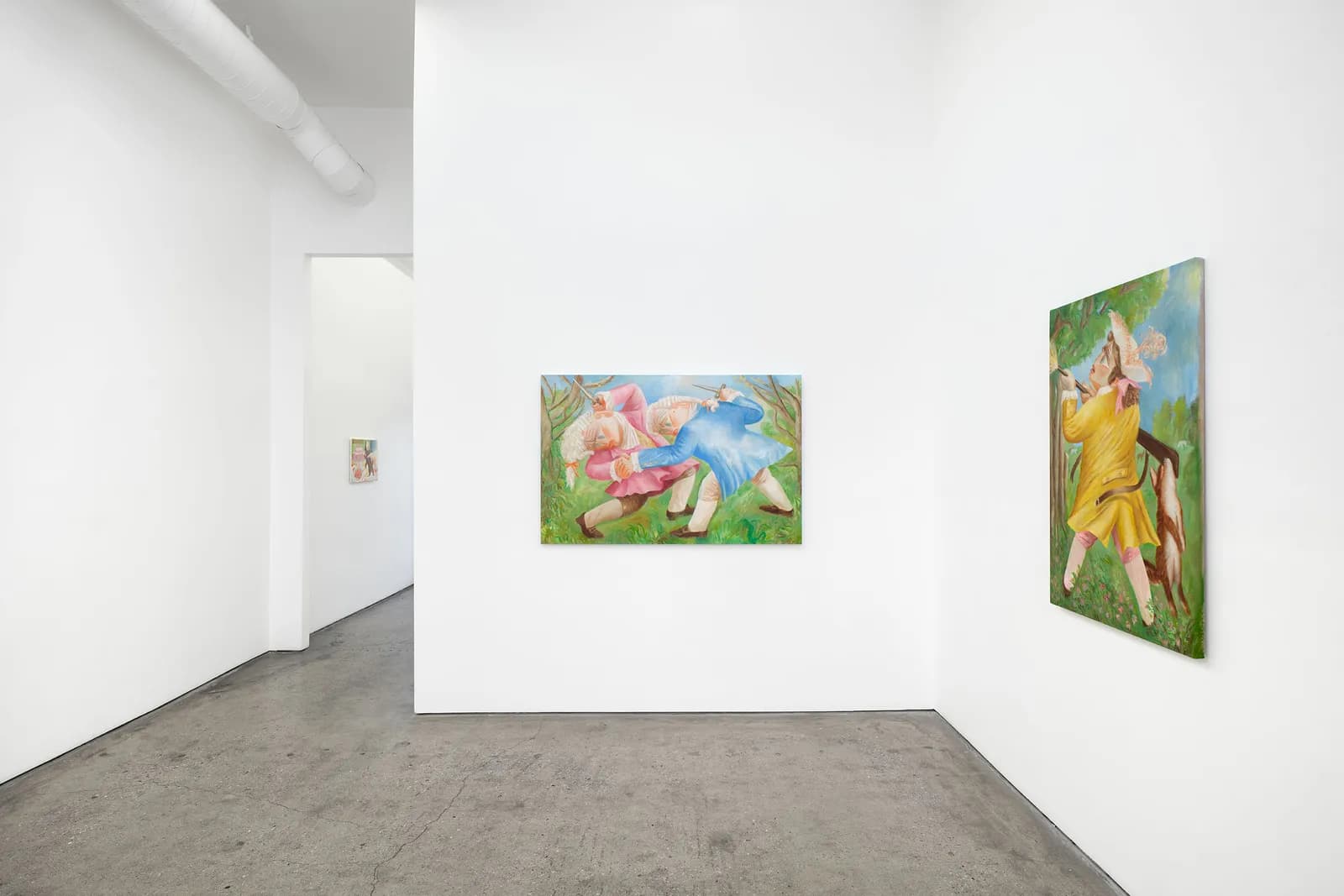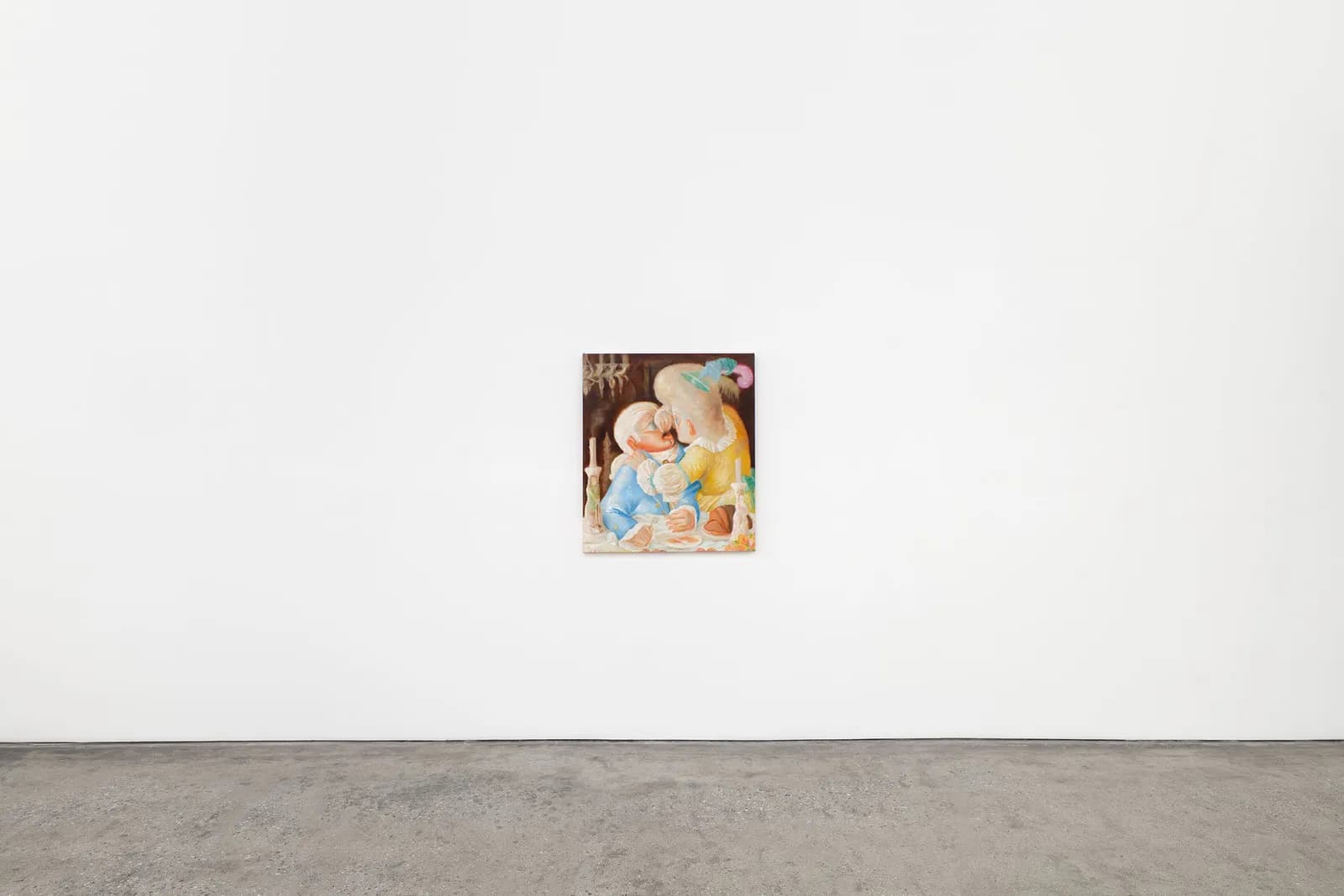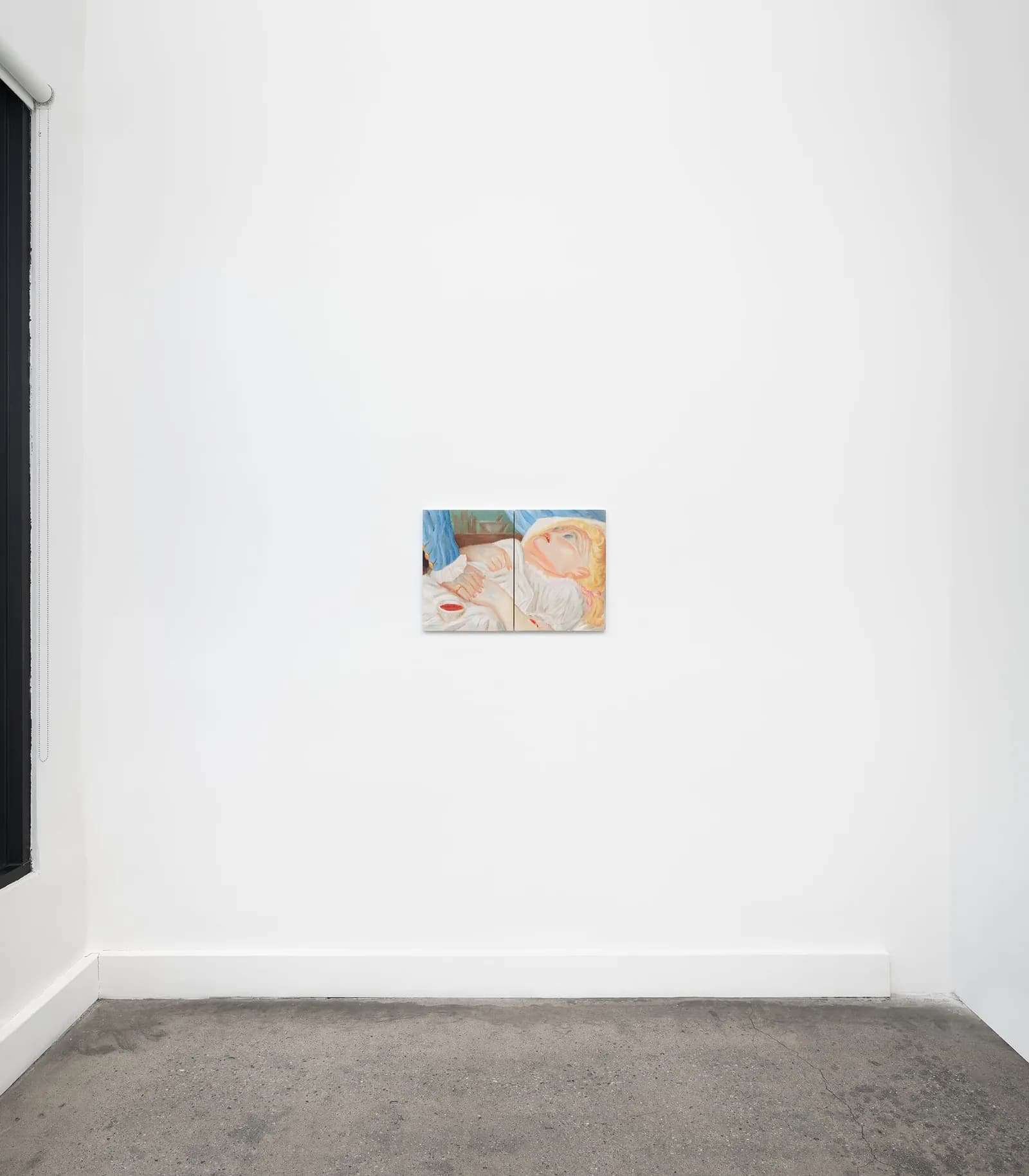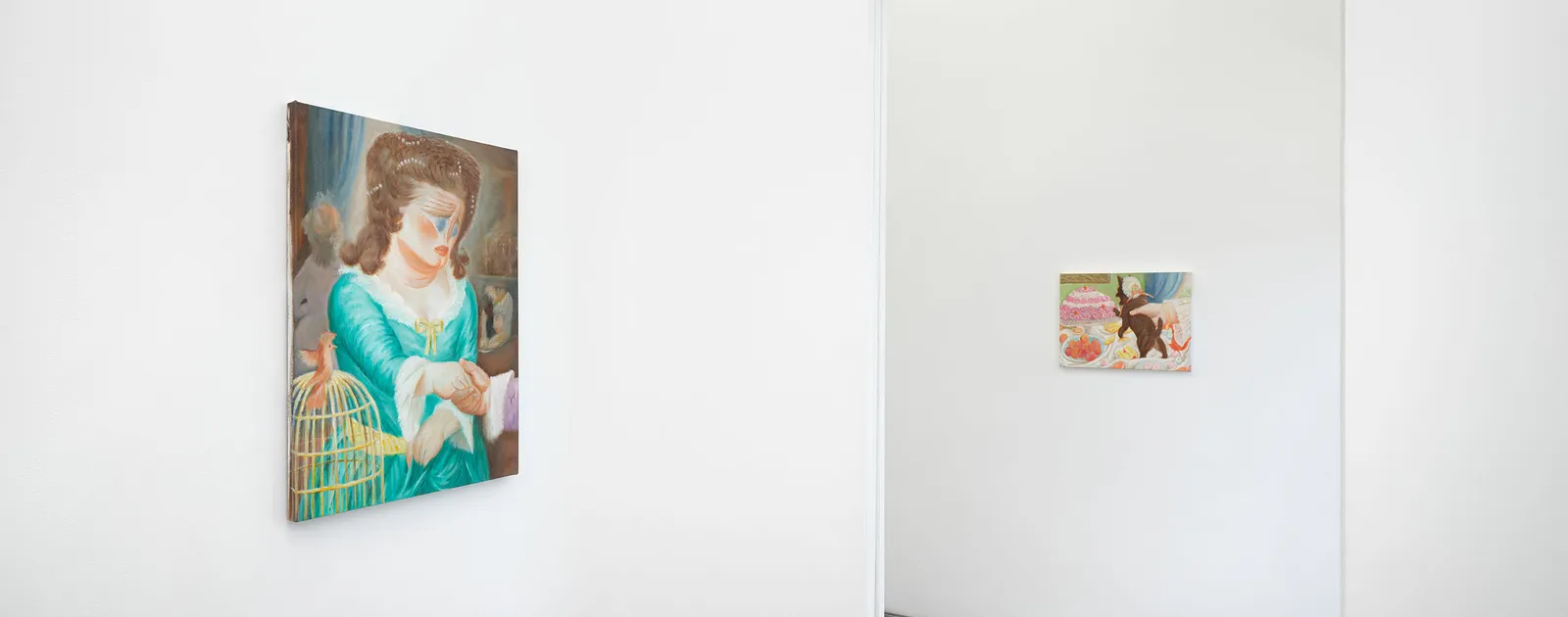
Falon Stutzman’s The End of a Long Line casts the late eighteenth century as a fever dream of pastel silks and pageantry. Drawing on Gainsborough and rococo painting, she stages dysfunctional family scenes—brawling brothers, upended mothers, husbands choking on roast beef—where excess papers over precariousness. Soft-faced archetypes and small props tip opulence toward fable, costuming contemporary anxieties about appearances and propriety.