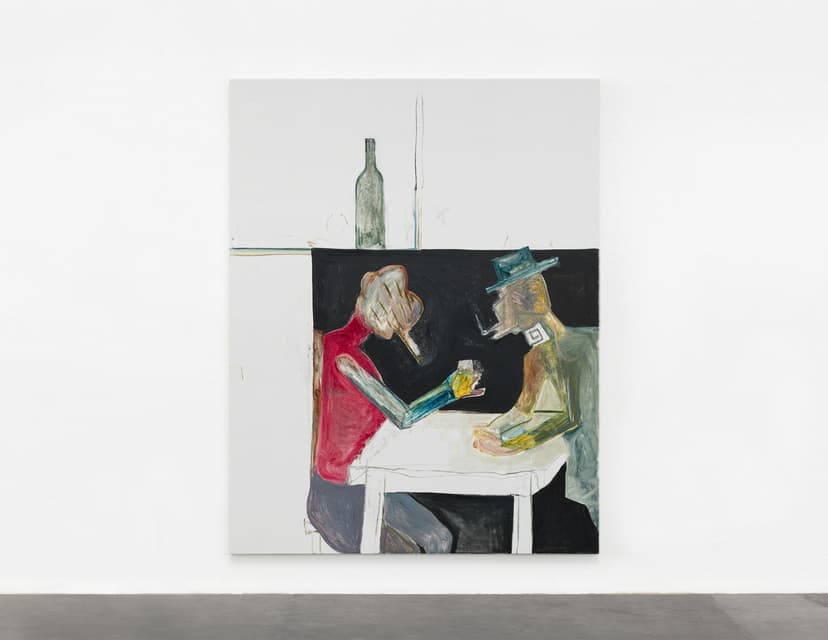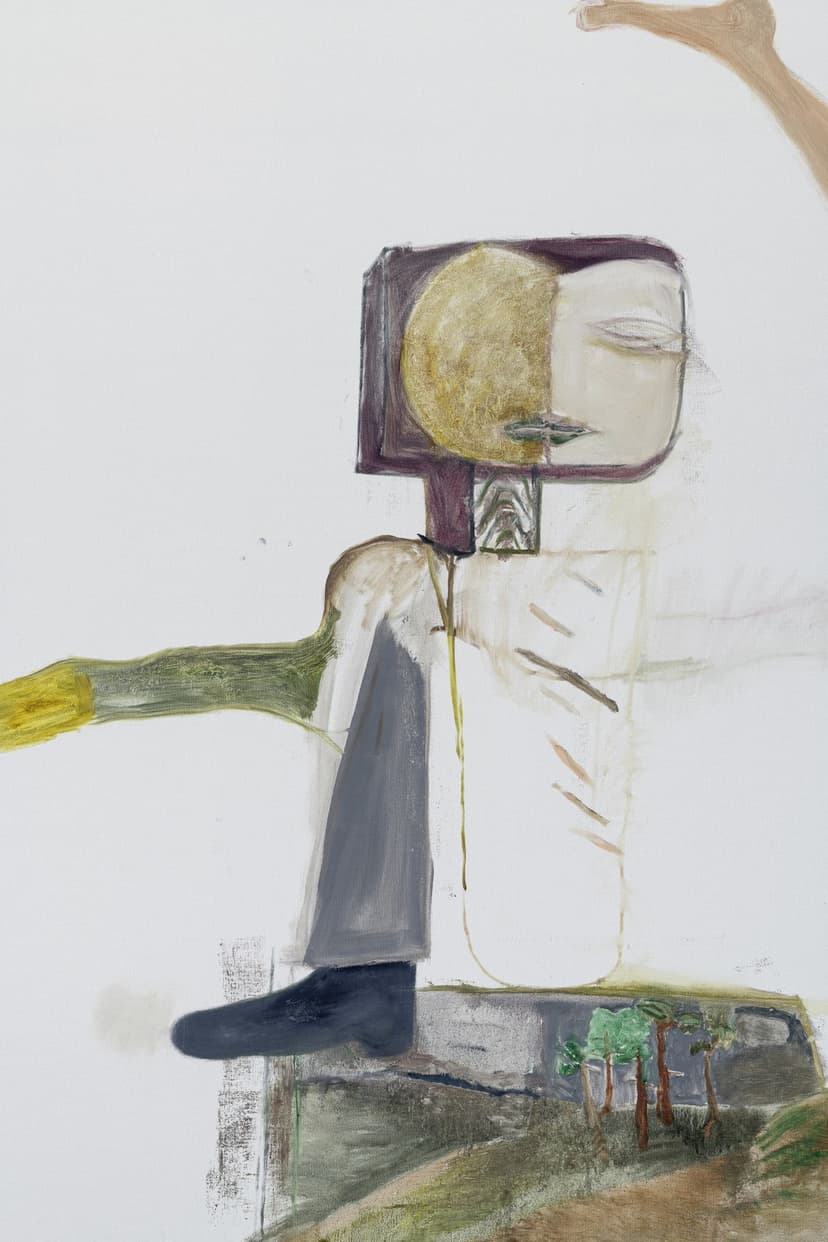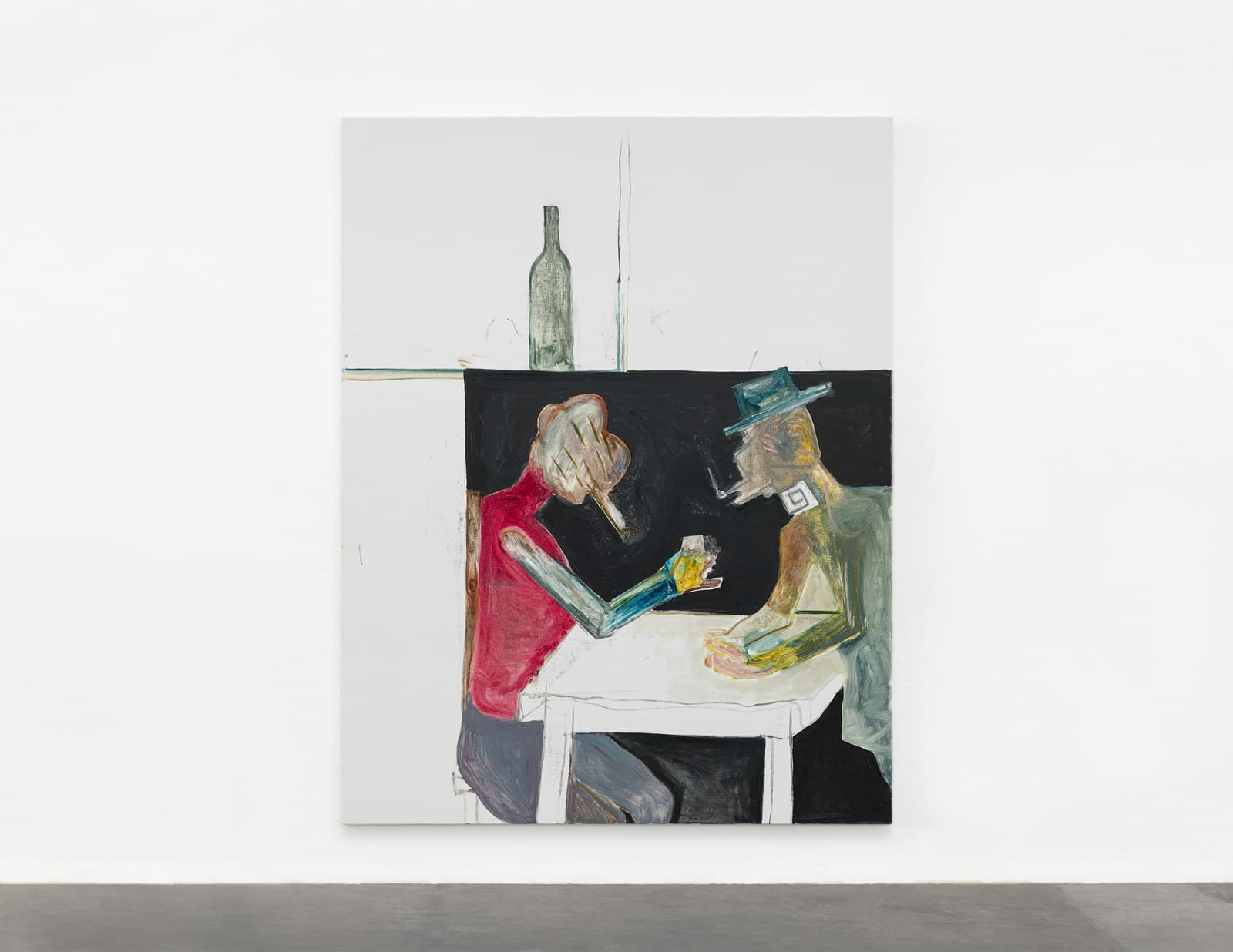
Last fall I spent some days in Arles. I meandered through the streets, read the van Gogh letters to his brother Theo. I tried to trace his paintings whilst trying to forget where I came from. I imagined embracing a certain universal Vincent van Gogh motif and digesting it through my own painting journey. A possibility to lose myself. An attempt to free (my) paintings from content. Wanting to be austere. Wanting to be permeable. A somebody who is a nobody. No beginning. And no end. Is there a different conversation between a viewer and a painting and the conversation between a painting and a painting? Amnesiac. A smokescreen. Vincent- the amniotic fluid for these paintings. —Tobias Pils Deeply rooted in the history of the medium yet firmly of the present, Tobias Pils treats painting as a continual and open question, with each mark and each painting informing what comes next. Despite an explorative career that has not been fixed on one genre, or even one style, Pils has never made work so personal and yet so external to himself. Titled Vincent van Gogh , the exhibition boldly references one of the most widely recognized artists of all time whose life and work has itself become a myth. By entering into a conversation with van Gogh, as well as Pils's own past repertoire, the exhibition generates expansive yet intimate paintings. Several motifs emerge and anchor the exhibition. The tabletop appears in nearly every painting. It is a site where still life, landscape, portraiture, and abstraction can perform their roles as if on a stage, becoming the support structure of the show. The mythic and eponymous figure of van Gogh makes frequent appearances as well, mingling with Pils’s own motifs. Wearing his bandage and fur cap, perhaps the most obvious and visible symbols of his personal mythology, his legacy looms sometimes in center stage and sometimes in the wings. Through the sublimation of another artist’s likeness, like a character he is putting on, Pils attempts to shed his skin, and yet his shape comes through stronger than ever. In the forms, the negative space, balance and imbalance, regardless of the image or content itself, it is entirely clear who the author of this play is.
Tobias Pils (b. 1971, Linz, Austria) lives and works in Vienna. He studied at the Academy of Fine Arts, Vienna from 1990 to 1994. Pils was the subject of a career survey titled Shh at mumok – Museum moderner Kunst Stiftung Ludwig, Vienna (2025). Other select solo exhibitions include Galerie Eva Presenhuber, Zurich (2025); Galerie Gisela Capitain, Cologne (2025); Galerie Eva Presenhuber, Zurich (2024); David Kordansky Gallery, Los Angeles (2021); Galerie Eva Presenhuber, New York (2020); Galerie Gisela Capitain, Cologne (2019); Kunsthalle Krems, Krems (2017); Chinati Foundation, Marfa (2016); Secession, Vienna (2013); and Landesgalerie des Oberösterreichischen Landesmuseums, Linz (2003). Select institutional group exhibitions include The Echo of Picasso, Museo Picasso, Málaga (2023); ON STAGE – Kunst als Bühne, mumok, Vienna (2023); Enjoy. Die mumok Sammlung im Wandel, mumok, Vienna (2021); Au rendez-vous des amis, Pinakothek der Moderne, Munich (2020); Picasso et la bande dessinée and Picasso Poète, Musée Picasso, Paris (2020); Jay DeFeo – The Ripple Effect, Aspen Art Museum, Aspen (2018); Fotografie. Skulptur. Malerei (with Bernhard Fuchs and Justin Matherly), Josef Albers Museum, Bottrop (2017); Spiegelnde Fenster, 21er Haus, Vienna (2017); and the 4th Beijing International Art Biennale, National Art Museum of China, Beijing (2010). Pils was awarded the Otto Mauer Prize in 1994 and the Anton Faistauer Prize for Painting in 2011. He received an ISCP Scholarship in New York (2014) and was an artist in residence at the Chinati Foundation, Marfa (2016). Public collections include Museum Stift Admont, Admont; The George Economou Collection, Athens; Kunstmuseum Bonn (Stiftung KiCo), Bonn; Sammlung Scharpff-Striebich, Bonn; Josef Albers Museum Quadrat, Bottrop; Sammlung Reiner Speck, Cologne; The Warehouse, Rachofsky Collection, Dallas; Le Consortium, Dijon; Neue Galerie am Landesmuseum Joanneum, Graz; Lentos, Linz; Goetz Collection, Munich; Lenbachhaus, Munich; Musée d’Art Moderne, Paris; Österreichischer Skulpturenpark, Unterpremstätten; Albertina, Vienna; Strabag Kunstforum, Vienna; and mumok – Museum moderner Kunst Stiftung Ludwig, Vienna.