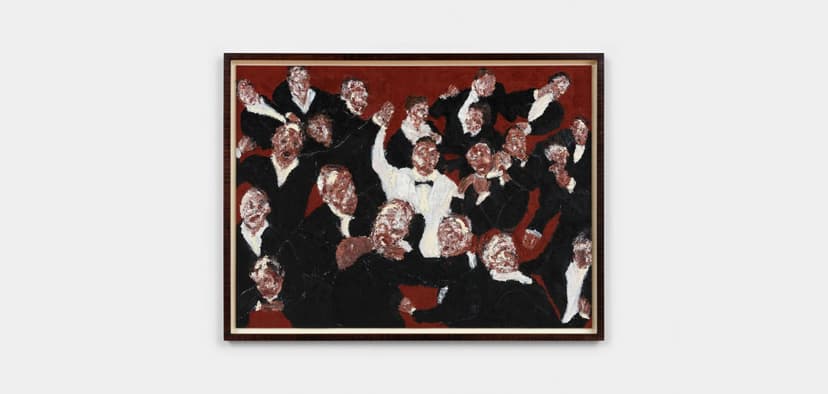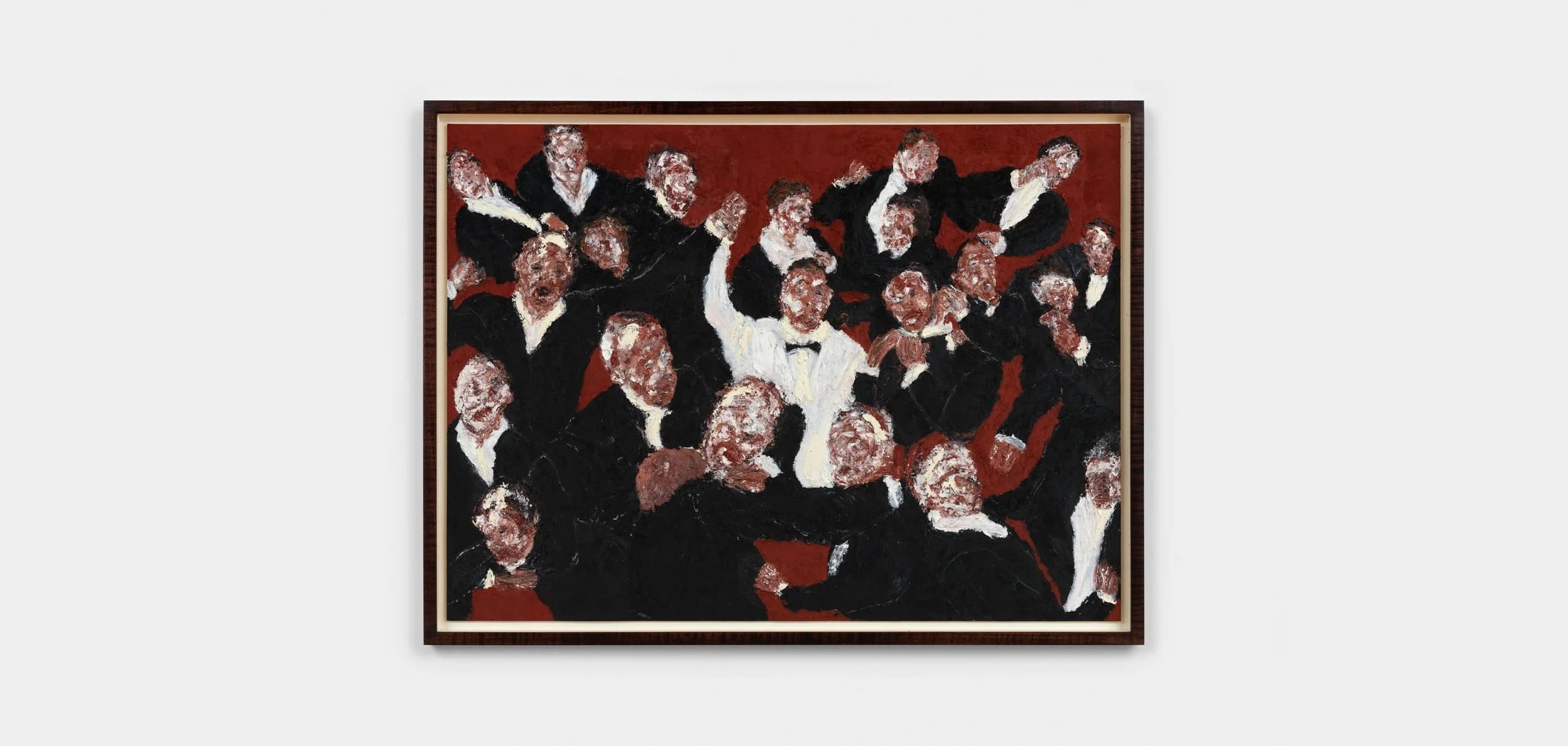
We prayed and prayed and nobody listened introduces Loral Raphael as a painter of dense, allegorical scenes shaped during periods of travel and musical composition. Made in transient spaces, the works channel tensions of collaboration into solitary, expressive pictorial dramas that echo orchestral structure and staging. Figures gather in shifting settings—concert halls, chambers, racetracks—invoking Expressionist lineages and archetypal conflict. Raphael’s recurring characters enact fractured narratives of societal strain, moral ambiguity, and spiritual rupture. Referencing Spinoza and early modernist spectatorship, the paintings present a world nearing collapse while also asserting art’s capacity for immediacy, emotional force, and enduring inquiry into human nature.