Discover galleries open late for Tribeca Gallery Night! Thuesday, May 14th 5-8pm
May 14 - Jun 27
May 14 - Jul 24
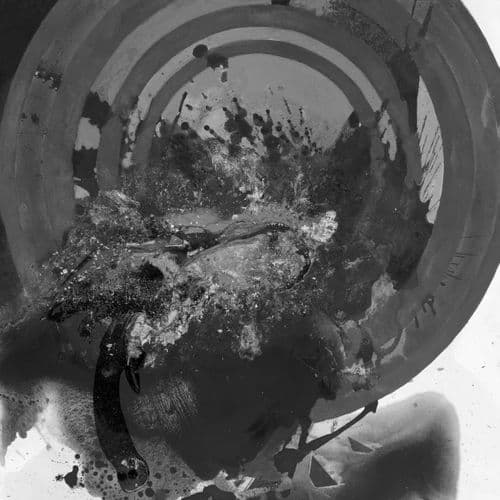
On the Nature of Daylight brings together twelve artists around daylight as subject and structural force — its presence, absence, and the charged space between. Curated by Kristen Becker, the exhibition spans acrylic, bronze, cut paper, and resin, with works ranging from Peter Wickenden's intricate ink ecologies and Sara Siestreem's haunted xerographic silhouettes of an extinct oyster species to Sarah Peters's uncanny busts that shift identity with the viewer's vantage point. Light here is never neutral — it discloses and conceals, renders the familiar strange, and makes the unseen suddenly present.
Apr 16 - May 23
May 14 - Jun 20
Sally Silberberg: Shifting Ground presents porcelain sculptures from the 1980s — a largely unseen body of work curated by Glenn Adamson that marks a decisive shift from functional ceramics toward radical sculptural language. Abandoning the potter's wheel, Silberberg built forms from solid blocks of porcelain, layered with pigment, cut, torn, and carved to evoke fractured stone and exposed geological strata. Angular, striated, and weighty, the works push porcelain to its structural and perceptual limits — balanced between precision and disruption, evoking forms under pressure caught in continual transformation.
Apr 23 - May 30
11:26 PM Louisa Chase: The Eighties presents paintings and works on paper from the mid-1970s to mid-1980s, marking Chase's most comprehensive New York exhibition in over 25 years. Positioned at the intersection of New Image and Neo-Expressionism, Chase combined gestural abstraction with cartoon-like figuration — torsos, feet, hands, landscape forms — rendered in vibrant, emotionally charged color. A 1980 trip to Italy deepened her engagement with early Sienese and Florentine painters, while Philip Guston, a friend and mentor since 1975, shaped her psychologically charged compositional language. By the mid-1980s she had shifted toward pure gestural mark-making, using blades and trowels in place of the brush.
Gina Sawin: Bird Migration presents new paintings depicting birds in flight — flocks dissolving into sky through a limited palette and pebbly surface where form and atmosphere become nearly indistinguishable. Geometry of shifting lights and darks conveys movement while suggesting fragility and resilience alike. For Sawin, migrating birds evoke the earth's life cycles and, in her words, "the strength of the whole as a sum of parts" — the paintings quietly asking: will we get where we need to go?
Apr 21 - May 16
Gold Standards: The Art of the Orotone presents nearly one hundred examples of the short-lived early twentieth-century photographic process in which images were printed on glass and backed with gold, producing warm, glistening pictures typically sold as tourist souvenirs of the American West. Drawn from the largest known private collection of orotones, the exhibition features majestic views by Arthur Clarence Pillsbury alongside works by photographers many of whose names have been lost to history. Part decoration, part memorialization, the objects sit at the intersection of fine art, craft, and commercial souvenir culture.
Apr 18 - May 16
Emily Kam Kngwarray: The Turning Season surveys the career of the Anmatyerr Elder and custodian of Alhalker, from batik works of the early 1980s through her final canvases of the mid-1990s. Rooted in the Dreaming — a lived worldview in which ancestral creation stories animate land, people, and time — Kngwarray's paintings embody rather than depict the rhythms of her Country. The rhizomatic paths of the pencil yam, whose seeds give the artist her middle name, animate her iconic dot compositions; colors shift with the seasons, subdued in dry periods and vivid after rain. In fewer than a decade of painting on canvas, she produced some 3,000 works.
May 14 - Aug 14
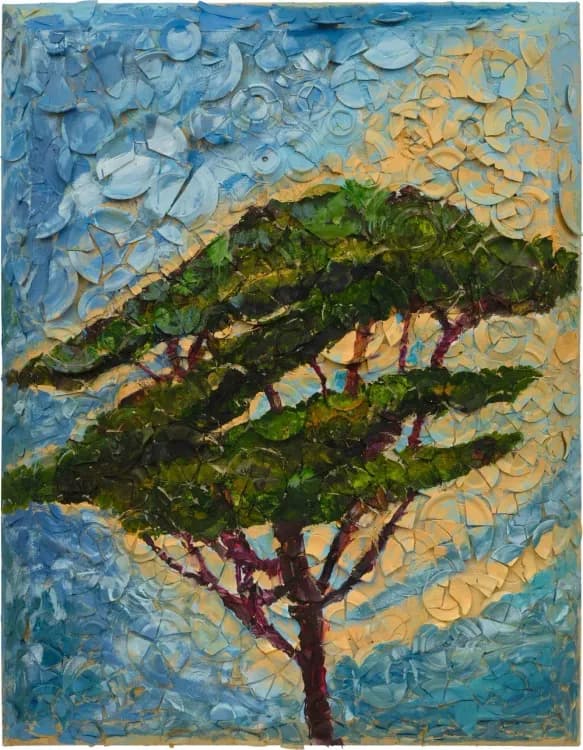
Julian Schnabel: Italy Through Its Trees presents map drawings and plate paintings centered on the umbrella pine — the iconic Pinus pinea of Rome's Villa Borghese and the groves surrounding his house in Ansedonia. Schnabel sourced 18th-century maps of Italy, reproducing them at large scale and laying down the thin trunks and luscious canopies of pines across their boundaries. The corresponding plate paintings, made on the floor with paint mixed directly on shattered crockery surfaces, mark the first time Schnabel has made drawings for paintings. Not depictions of trees but extensions of their essence, the works oscillate between the pictorial and the physical — "always congealing and becoming unhinged."
David Hockney: The Moon Room presents fifteen iPad paintings from Hockney's Moon Room series, made during the COVID-19 pandemic at his 17th-century farmhouse in Normandy. Capturing the moon's changing phases from various vantage points across his twelve-acre farm, the works are meditative and dreamlike — made possible by the iPad's backlit screen, which allowed Hockney to draw moonlit shadows cast by trees on grass in near-total darkness. Marking the series' first New York showing, the exhibition reflects his enduring preoccupation with light, ephemerality, and nature's cycles of renewal.
Emma Webster: Rues and Leaves Themselves Alone presents paintings of landscapes where night is always falling — warped woodland canopies, glowing animals, flying horses, double-headed deer — alongside a video game that wanders through the same dioramas that inspire the paintings. Neither rendering is a perfect representation: one bright and meditative, the other bleak and foreboding. Drawing on cave painting, broken 3D scans, and virtual sculpture, Webster combines and smears different modes of representing space until they vibrate between two, three, and four dimensions — propositions rather than depictions, spaces that cannot quite be understood.
Apr 30 - Jun 6
May 13 - Jun 20
This exhibition marks four decades of collaboration between the gallery and Paula Cooper, highlighting editions produced at Gemini G.E.L. by artists including Jonathan Borofsky, Cecily Brown, Sophie Calle, Mark Di Suvero, Robert Gober, Donald Judd, Elizabeth Murray, Claes Oldenburg, and Joel Shapiro. The presentation reflects a shared commitment to supporting artists and expanding the role of editions within contemporary art.
Mar 5 - May 22
This exhibition brings together paintings from across the career of British artist Leon Kossoff (1926–2019). Kossoff built his practice around sustained observation and spontaneity, returning repeatedly to the same subjects—North and East London streets, rail stations, and the people closest to him. His paintings are dense, structurally rigorous, and deeply felt, treating portraiture and cityscape as ongoing dialogues rather than fixed records. A key figure of the School of London alongside Francis Bacon, Lucian Freud, and Frank Auerbach, Kossoff held painting as an enduring means of capturing lived experience.
Apr 16 - Jun 20
Sanford Biggers: The Gift of Tongues transforms the gallery into a labyrinthine playhouse of curtains and false walls, through which works from his Codex, Chimera, and Shimmer series emerge in carefully staged vignettes. Marble Chimeras splice classical, neoclassical, and African sculptural traditions into hybrid forms; antique quilts — potentially coded Underground Railroad signposts — serve as palimpsests for painted and collaged interventions; sequined cloud motifs carry shifting, accumulated meaning across decades of practice. At the center, a marble bust painted to merge with the quilt behind it speaks only in tongues, leaving every symbol open to endless interpretation.
Apr 30 - Jun 13
May 7 - Jun 13
Double Dream showcases the breadth of Wurm’s experiments with the figure—at turns present, absent, supplanted, or distorted. Where the artist’s Dreamers visualize psychological weight with upper bodies made of oversized pillows, his Substitutes examine how clothing can function as a stand-in for the individual. Here, clothing is revealed as an icon, symbol, signifier, or even avatar, reinterpreting the age-old maxim “the clothes make the man.” This exhibition reveals Wurm to be a sculptor of surprising economy, continually asking how much can be communicated with how little.
Apr 23 - Jun 6
Martha Jackson Jarvis presents large-scale abstract works with smaller drawings that extend her visual language rooted in personal activism, generational cycles, the natural world, and cultural heritage.
Sheida Soleimani: Forest of Stars extends Soleimani's Ghostwriter series, which reconstructs her parents' experiences of political exile following the 1979 Iranian Revolution through studio tableaux combining archival photographs, symbolic objects, and living subjects. New Flyways photographs bring migratory birds into focus — drawn from her work as a wildlife rehabilitator — connecting displacement, survival, and care across species. A site-specific wall drawing by her mother extends this familial lineage into the gallery, proposing that tending to vulnerable bodies is itself a political act.
Apr 16 - May 22
Life with P. explores a lesser-known side of Philip Guston’s practice, focusing on works inspired by his marriage to poet Musa McKim and their life in Woodstock. The exhibition includes Guston’s “Poem Pictures,” drawings responding to McKim’s writing, along with large figurative paintings never previously exhibited. It coincides with a new publication featuring McKim’s journals from 1966–1976, edited by their daughter, Musa Mayer.
Apr 21 - Jul 10
Firelei Báez: Feet squelching on wet grass, nourished by uncertaint spans two floors with new paintings, works on paper, and large-scale bronze sculptures extending Báez's engagement with colonial legacies and the spiritual reverberations of the African diaspora. The centerpiece, View of Nature (2026), stretches eight panels across an entire wall, reworking an 1852 climate engraving into a liquid, atmospheric palimpsest where taxonomic structure flickers beneath layered foliage and light. Two towering bronze ciguapas — female tricksters of Dominican folklore adorned with real feathers and sculpted foliage — kneel and coil under the tension between history's weight and the possibility of freedom. Upstairs, monumental works on paper shift toward the cellular and cosmic, demanding slower, sensation-based reading.
May 12 - Jul 31
Carol Rama: I See You You See Me gathers key works spanning six decades of the radical Italian artist's career, from 1947 through 1998. Working across paint, textile, sculpture, and bricolage, Rama forged connections between desire, sacrifice, eroticism, repression, and rebellion in ways largely dismissed during her lifetime. Organized by Carlo Knoell, the exhibition brings renewed focus to the formal breadth of a practice that has exerted growing influence on contemporary artists who recognize in Rama an unwavering belief in visual art as a tool for liberation.
Meg Webster presents new sculptures and drawings following Webster's major exhibition at Dia Beacon. The centerpiece, Thicket (2026), layers plant cuttings into a dense spiraling structure wide enough to enter, making the body an active participant in the work. New drawings on paper use organic materials — spices, powdered vegetables and flowers — rubbed directly onto square sheets, centering color, texture, and scent. A three-part beeswax sculptural relief extends this engagement with embodied perception. Throughout, Webster continues her four-decade practice of bringing natural materials into dialogue with Minimalism's formal vocabulary.
May 9 - Jul 24
This solo exhibition of Pacita Abad features works from her Door to Life series, inspired by her travels in Yemen. Drawing from the architecture and decorative arts of historic Sanaa, the works reference painted doors and stained glass gamariya windows, translating these visual sources into compositions that reflect place, pattern, and cultural memory.
Apr 30 - Jun 20
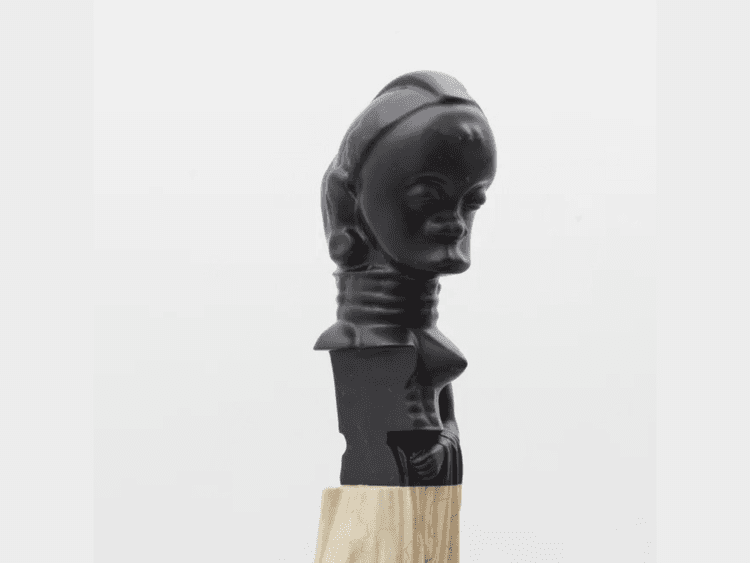
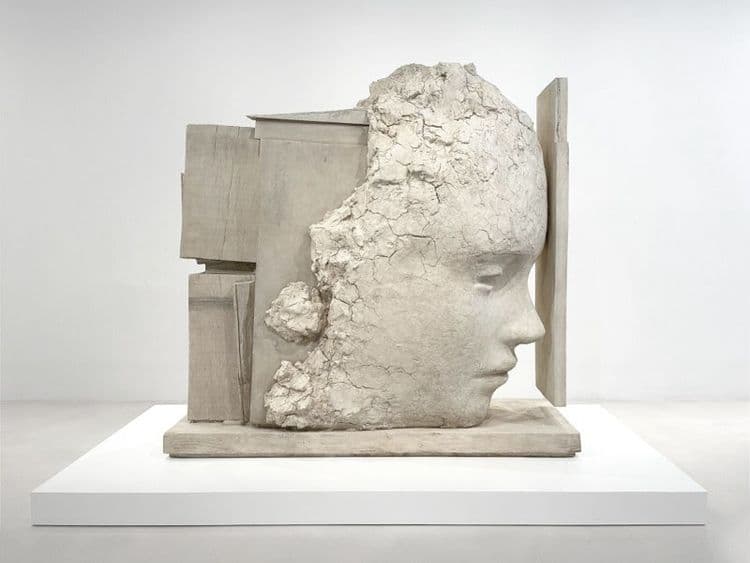
Mark Manders presents new bronze busts, sculptural landscapes, and paintings that populate the gallery like frozen thoughts — a scenography of the mind. Two monumental heads anchor the ground floor: Bonewhite Clay Head with Vertical-Cloud, its cracked surface ancient and otherworldly, and Monument, a bronze female head made in memory of his mother's silent grief, a lump visible on the figure's throat like words unable to break free. Bone-white recurs throughout alongside self-made newspapers containing all existing English words in random order, framing spare paintings like windows onto an ambiguous chronology. Gravity, melancholy, and the permeable boundary between painting and sculpture define Manders's fictional world.
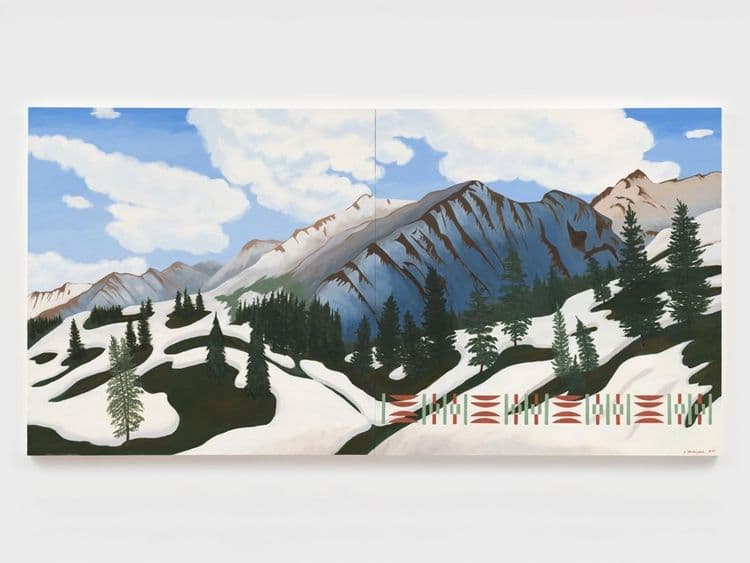
Kay WalkingStick: Mesas/Mountains/Sky presents new paintings on panel and paper spanning landscapes across Colorado, California, Arizona, New Mexico, Idaho, and Rhode Island. Working from memory after visiting sites in person, WalkingStick moves between watercolor and oil, precision and expressiveness. Central to the work is her overlay of Indigenous patterning — researched in Smithsonian archives — onto painted surfaces as a gesture of reclamation and protection. Complementing the American landscape tradition, the works reclaim land not as territory but as a site of cultural memory and ancestral continuity.
Apr 11 - May 30
Jasper Johns: Copy/Trace focuses on two related processes running through Johns's practice across six decades — copying and tracing — as deployed in drawings, prints, and works on plastic. Curated by Jeffrey Weiss, the exhibition brings together works in which Johns copies one of his own paintings, leaves bodily imprints, or traces existing images through translucent supports. Drawn from museums, private collections, and Johns's own holdings, the presentation illuminates how meaning and making are inextricably linked in his work.
May 7 - Jun 26
Apr 2 - May 16
Apr 25 - Jun 20
John Armleder: Ripple: Furniture Sculpture and Painting after 1982 presents historic works from Armleder's Furniture Sculpture series, in which found decorative objects accompany paintings so that each bridges artist and viewer through generous access points of association. Inspired by Erik Satie's furniture music and John Cage's embrace of chance, the works foreground collectivity — shaped by Armleder's time in prison and on a rowing team — over individual authorship. Leaving works untitled asserts a Duchampian belief that meaning belongs to the viewer, not the artist.
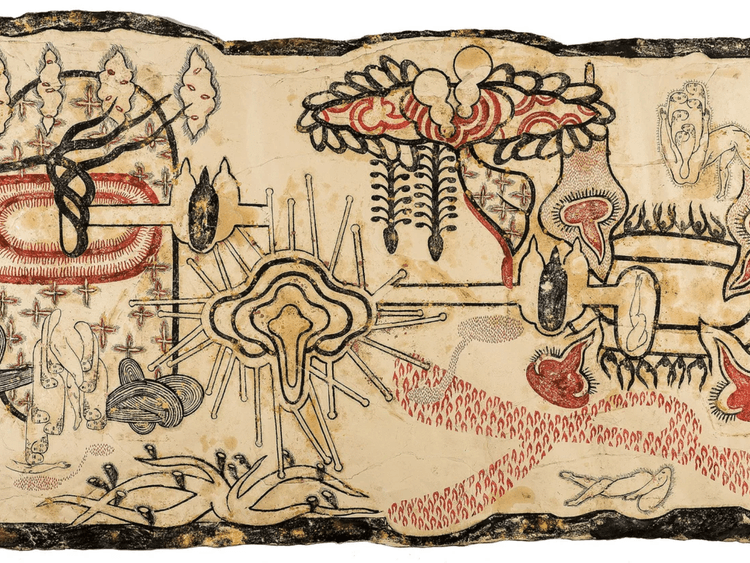
Contracorrientes (Countercurrents) pairs Miguel Covarrubias and Dr. Lakra — born nearly seven decades apart — around a shared precocity, counterhegemonic perspective, and mastery of line. Covarrubias's Bali illustrations and Pacific cartography meet Lakra's reworked Bhutanese iconography and large-scale tattooing map of the Pacific Rim. Both artists use the body as a primary site of expression, movement generating form across caricature, monoprint, and ceramic. Together they propose alternative spatial and cultural relationships, centering the Pacific rather than Europe and marked bodies over mapped territory.
May 13 - Jun 13
Benny Andrews: Migrants presents the artist's final body of work, created between 2004 and 2006 and tracing three historical migration routes connected to his Black, White, and Cherokee ancestry — the Great Migration, the Dust Bowl exodus, and the Trail of Tears. Completed in Andrews' signature collage technique incorporating textile fragments, thread, and repurposed canvas, the ink drawings and paintings foreground human resilience amid injustice. Timed to coincide with the 250th anniversary of the United States, the exhibition carries urgent contemporary resonance.
Apr 18 - Aug 7
Lucia Laguna: Apenas meus cabelos são brancos… [Only my hair is white…] presents new paintings from Laguna's ongoing Pequenos formatos and Paisagem series, reflecting a recent shift prompted by her move from a suburban Rio de Janeiro garden to a denser urban apartment in Laranjeiras. Windows, doors, and tiles frame semi-abstracted landscapes where exuberant bursts of flora — trees, flowers, birds, human forms — persist against architectural geometry. The works address the fracturing of natural spaces amid urban development while conveying Laguna's personal vision of a world she observes with both precision and adoration.
This exhibition comes after more than twenty years of joint work on the FACADES series by Markus Brunetti and his partner and collaborator, Betty Schöner.
Pace Prints is pleased to present Where is My Mind?, an exhibition marking the release of a suite of 10 archival pigment prints by Alex Israel. Each work presents a new iteration of the artist’s Self Portrait series, mounted in a custom, artist-designed frame.
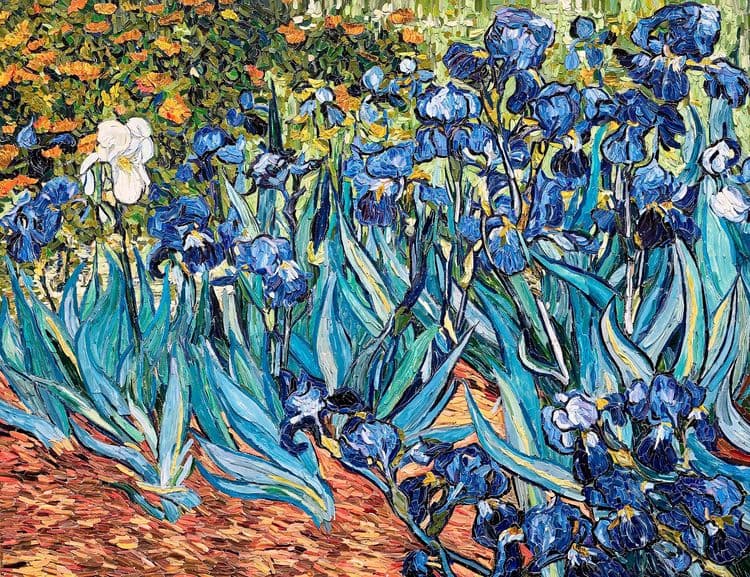
In Brushstrokes, Muniz presents a vibrant homage to the pictorial language of Impressionist and Post-Impressionist painters. The works in this series are created from distinct strokes of paint that are photographed, cut out, and arranged into compositions after artists such as Paul Cézanne, Joaquín Sorolla, Vincent van Gogh, and Edouard Vuillard.
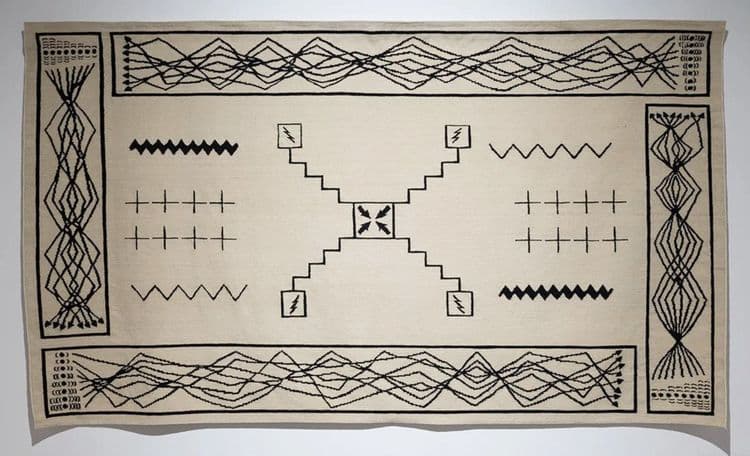
Raven Chacon is a Pulitzer-Prize winning composer, performer, and artist from Fort Defiance, Navajo Nation. Score for Coming Storms includes a large-scale visual score for a performance, a sound installation and accompanying textile, and ink drawings.













![Apenas meus cabelos são brancos [Only my hair is white]](/_next/image?url=https%3A%2F%2Fcertain-family-926750e154.media.strapiapp.com%2Fmedium_imgi_1_ll_header_gl_17347_paisagem_n_175_landscape_n_175_4eac27bba0.jpg&w=3840&q=75)